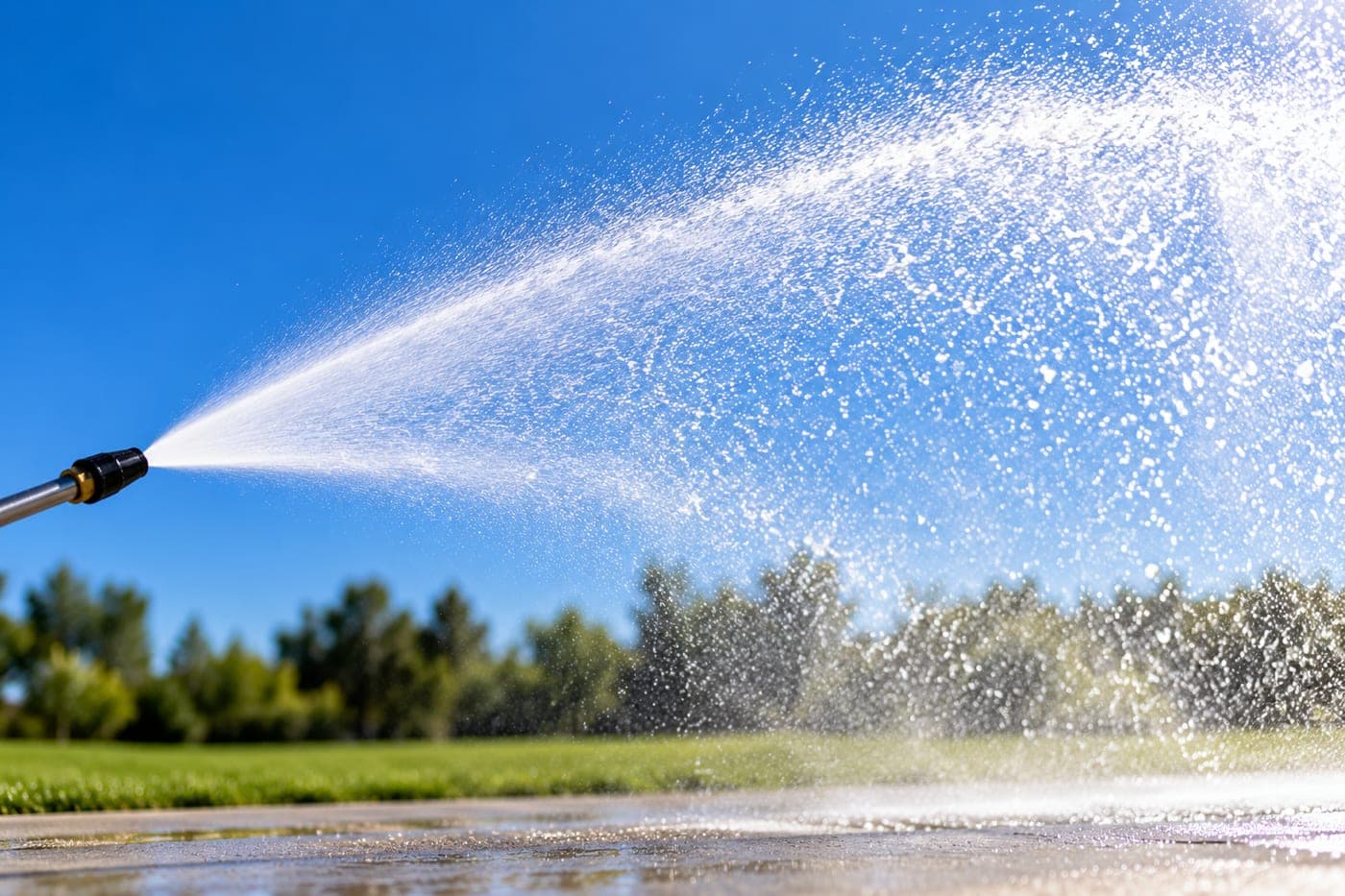
Soft Washing vs Pressure Washing: What Your Siding Actually Needs
The green film on your siding is algae, and blasting it with high pressure is the one approach almost guaranteed to cost you money. Here is the difference between the two methods and which surfaces need which.
Ask ten people what pressure washing is and nine will describe the same thing: a high-pressure jet of water blasting grime off a surface. For a concrete driveway, that is roughly right.
For the side of your house, it is the fastest way to turn a cleaning bill into a repair bill.
The two methods are not the same job
Pressure washing uses mechanical force. Water at 2,000 to 4,000 PSI physically knocks material off a hard surface. It is the correct tool for concrete, brick, pavers and most hardscape: surfaces dense enough to take the hit.
Soft washing uses chemistry. A cleaning solution is applied at around 100 PSI, roughly garden hose pressure, then left to dwell for a few minutes while it kills the organic growth, and rinsed off gently. The solution does the work. The water just carries it on and off.
The distinction matters because most of what discolours a house is not dirt. It is alive.
What is actually on your siding
That green-grey film creeping up from the foundation and spreading across the shaded elevations is algae, mildew and sometimes lichen. In the Georgia climate it is close to inevitable: we have humidity for most of the year, heavy tree cover, and long damp mornings where shaded walls never fully dry out.
This is why the north and east sides of a house almost always look worse than the south and west. Less sun, longer drying time, more growth.
And here is the part that decides the method: pressure removes the visible layer, but it does not kill the organism. Blast algae off a wall and you have removed the part you can see while leaving the root structure embedded in the surface texture. It comes back in months rather than years. Soft washing kills it, which is why the results last so much longer.
What high pressure does to a house
Siding is not a driveway. A few specific failures come up again and again:
Water driven behind the panels. Vinyl and fibre cement siding are designed to shed water running down them. They are not designed to resist water fired upward at 3,000 PSI. Water forced behind a panel gets into the sheathing and the wall cavity, where it has no fast way out. Mould inside a wall is a far more expensive problem than algae on the outside of one.
Scoured and chalked vinyl. High pressure abrades the finish on vinyl siding, leaving a dull, uneven, slightly furry surface that holds dirt more readily than it did before. It is permanent. The only fix is replacement or paint.
Stripped paint and lifted caulk. On painted wood or trim, high pressure finds every marginal edge and takes it. Caulk lines around windows get cut out. Lap joints get opened up.
Broken seals and flooded fixtures. Window seals, light fittings, dryer and HVAC vents, and electrical penetrations are all vulnerable. Water pushed into a soffit vent ends up in the attic.
If a contractor turns up and immediately points a high-pressure wand at your siding, that tells you most of what you need to know about how the job will go.
Which method for which surface
As a rule of thumb for a typical Georgia home:
| Surface | Method |
|---|---|
| Vinyl, fibre cement, painted wood siding | Soft wash |
| Stucco and EIFS | Soft wash, always |
| Asphalt shingle roofs | Soft wash, always |
| Brick (general cleaning) | Soft wash |
| Concrete driveways, walkways, patios | Pressure wash with a surface cleaner |
| Pavers | Pressure wash, then re-sand |
| Wood decks and fences | Low to moderate pressure, with a cleaner |
| Gutter exteriors | Soft wash plus a dedicated brightener |
Most houses need both methods in a single visit. The siding gets soft washed, the driveway and walkways get surface cleaned. A contractor who only owns one approach will use it everywhere.
What a proper house wash looks like
- Walk the property first. Note the growth pattern, the siding type, any damaged panels or failed caulk, and anything that needs protecting.
- Protect the landscaping. Beds and shrubs get pre-wet and rinsed again afterwards. Pre-wetting is what actually prevents damage, diluting the solution before it can concentrate on a leaf.
- Apply the solution from the bottom up. Working upward prevents the streaking you get when solution runs over dry siding.
- Let it dwell. This is the step that gets skipped when someone is rushing. The chemistry needs a few minutes.
- Rinse top down, thoroughly, including windows and trim.
- Walk it again with you at the end.
A single-storey house usually takes two to three hours. A larger two-storey home takes most of a working day.
How long it lasts
A properly soft-washed house in our climate typically stays clean for two to three years. Heavily shaded elevations and houses backing onto woodland regrow faster, sometimes closer to eighteen months. Open, sunny lots can go longer.
If a wash only lasts a season, the growth was knocked off rather than killed.
Worth knowing before you book
Ask any contractor two questions. What pressure will you use on my siding? And will you pre-wet my landscaping? The answers separate the people who understand exteriors from the people who bought a machine.
If you are in Acworth, Kennesaw, Woodstock or anywhere across the northwest metro and you are unsure whether what you are looking at is dirt or growth, send a photo. We will tell you which it is, and whether it genuinely needs doing now or can wait a season.
Keep reading
- When Is the Best Time of Year to Pressure Wash in Georgia?Spring after the pollen drops is the obvious answer, and it is also the busiest and most expensive time to book. Here is what each season is actually good for in the Atlanta metro.
- Those Black Stripes on Your Gutters Are Not DirtYou had the gutters cleaned out and the stripes are still there. That is because tiger striping is bonded into the paint finish, not sitting on top of it, and it needs a completely different treatment.
- Why Your Roof Has Black Streaks (And What Actually Removes Them)Those dark streaks on your shingles are a living algae, not dirt. Here is what causes them in the Georgia climate, why pressure washing makes it worse, and what actually works.